You Build the Systems. You Own the Infrastructure.
You build the systems, own the processes, and manage the cases. When inclusion breaks down, you're the team that picks up the pieces — often without the tools, authority, or executive backing to fix the underlying infrastructure. This page brings together the evidence and actions most relevant to your work.
Orientation
Why This Matters
HR teams are often the first point of contact when an employee discloses a trans or nonbinary identity, requests a name change, or raises a concern. You're also the team that designs the systems, writes the policies, commissions the training, and manages the cases when things go wrong.
The evidence shows that the biggest risks for HR teams aren't about getting the policy wording right. They're about the infrastructure gap: systems that can't process identity changes without friction, managers who lack guidance, and case-handling processes that depend on individual knowledge rather than documented pathways.
The HR question: if an employee came to you tomorrow asking to change their name across all systems, how many steps would it take? How many people would need to know? How long before it was complete? If the answer involves more than one ticket, multiple handoffs, or "it depends" — that's your infrastructure gap.
Your Risk Signals
Four Numbers That Reveal Your Infrastructure Gap
41%
36.4%
47.8%
30.6%
Policy without infrastructure is a paper shield. Systems that can't process a name change without friction aren't neutral — they're hostile.
Your Playbook
Your Priority Actions
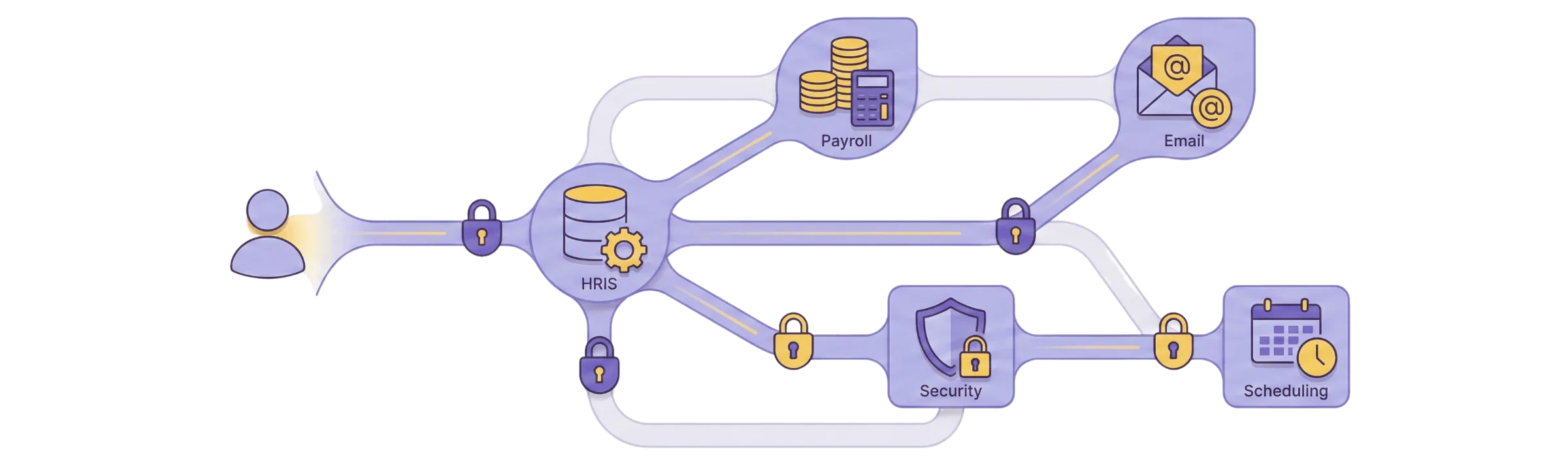
- Build a single identity change workflow with named owners and timelines, covering HRIS, payroll, directory/email, security passes, and scheduling systems
- Add privacy-by-design controls: "need to know" access, data minimisation, and legacy record handling
- Create manager guidance that translates policy into scenario-based practice — not just principles, but "when X happens, do Y"
- Review absence/medical leave provisions for gender-related medical needs
- Establish case-handling documentation standards so consistency is provable, not assumed
- Push for executive sponsorship — HR cannot carry contested inclusion decisions alone
Take Action
What's Your Next Step?
Start here: list every system an employee's name appears in, count the handoffs, and time the process. If it takes more than one ticket and more than 48 hours, that's your infrastructure gap.
Go deeper: half-day sessions to audit systems, map workflows, and build a prioritised action plan are available on request — evidence-first, operationally focused.
Take the five-minute Readiness Assessment — it covers systems and training readiness for you, benchmarks each answer against the 136 organisations in this study, and shows exactly where the gaps sit. Where the honest answer is "don't know", that's not a knowledge gap, it's a systems gap. See The Evidence (Themes 4 and 5) for how your organisation compares.