Where Policy Meets the Physical Environment.
You manage the physical environment where inclusion is either real or theoretical. Toilets, changing rooms, signage, access — these are the places where policy meets the daily experience of every employee. This page brings together the evidence and actions most relevant to making physical spaces consistent, safe, and dignity-preserving.
Orientation
Why This Matters
Facilities are where inclusion becomes visible, and where inconsistency creates the most daily friction. A policy that says "we welcome everyone" means little if the building doesn't reflect it. The research reveals significant variation in provision across sites, widespread uncertainty about what exists, and a governance gap in how facilities decisions are made.
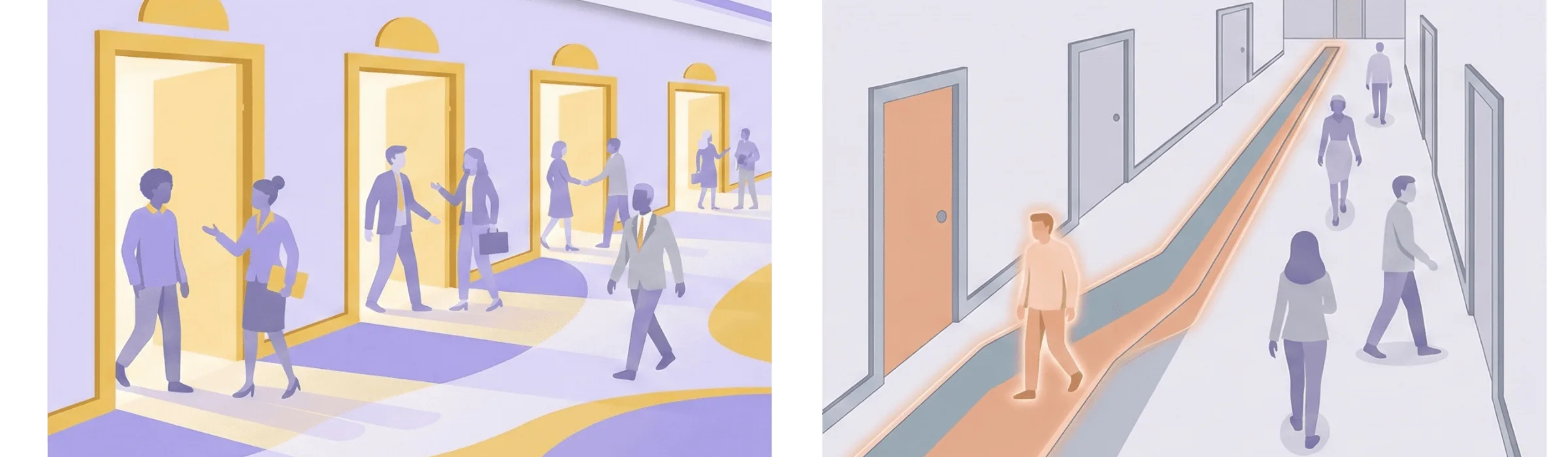
The facilities principle: alternatives must expand choice for everyone — not function as a default route, mandated workaround, or de facto segregation mechanism for trans or nonbinary people. Anything that routes specific individuals into separate provision creates consequential outing. The governance test: does this arrangement reduce confrontation risk and increase dignity — for everyone?
Your Risk Signals
Four Numbers That Map Your Provision Gap
46.3% of organisations provide gender-neutral toilets at all or most sites — which means the remaining 53.7% have inconsistent or absent provision.
46.3%
19.4%
20.9%
13.4%
Alternatives that route specific individuals into separate provision create consequential outing. The test is dignity — for everyone.
Your Playbook
Your Priority Actions
- Audit current provision across all sites — toilets, changing rooms, signage, and access arrangements
- Identify and address site-by-site inconsistencies — a postcode lottery of provision is a governance failure
- Set facilities governance principles that reduce confrontation risk and preserve dignity
- Define how contested situations are handled — not ad hoc, not by the person who happens to be on shift
- Ensure any alternatives expand choice universally — not containment for specific groups
- Build reporting into facilities management so provision is tracked, not assumed
Take Action
What's Your Next Step?
Start here: document what exists at every site — gender-neutral toilets, changing rooms, signage, access controls. The 20.9% "don't know" figure starts here: you can't govern what you haven't mapped. See the Toolkit, priority action four.
Go deeper: support is available to help estates teams develop governance principles that reduce confrontation risk and preserve dignity consistently, across all sites.
Take the five-minute Readiness Assessment — it covers facilities governance alongside the other four domains, benchmarks your answers against the 136 organisations in this study, and tells you honestly whether you have facilities governance at all. See The Evidence (Theme 3) for how others compare.